Practitioner Resources
1. Gene Cycles
Folate Pathway
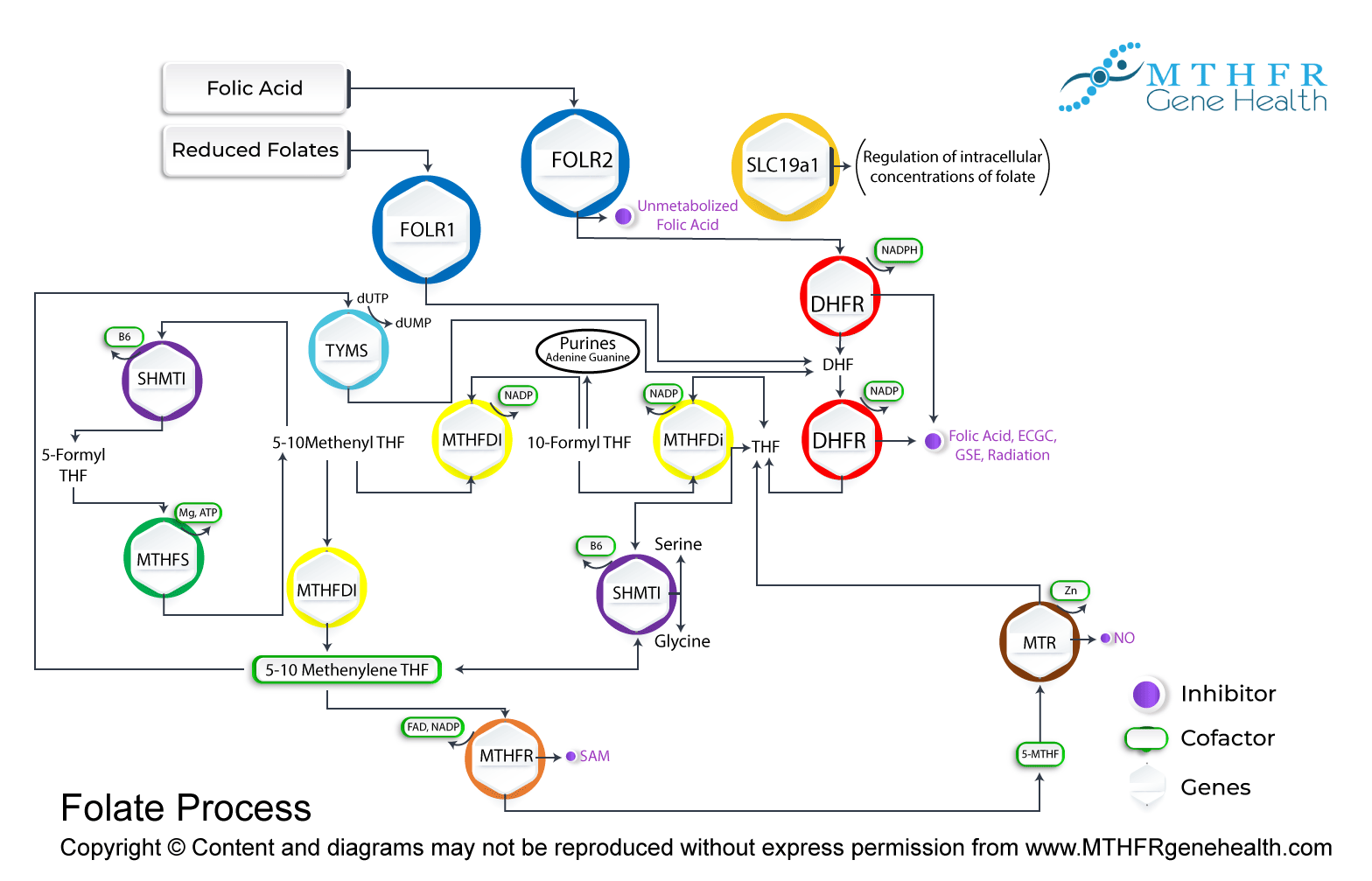
Methylation Pathway

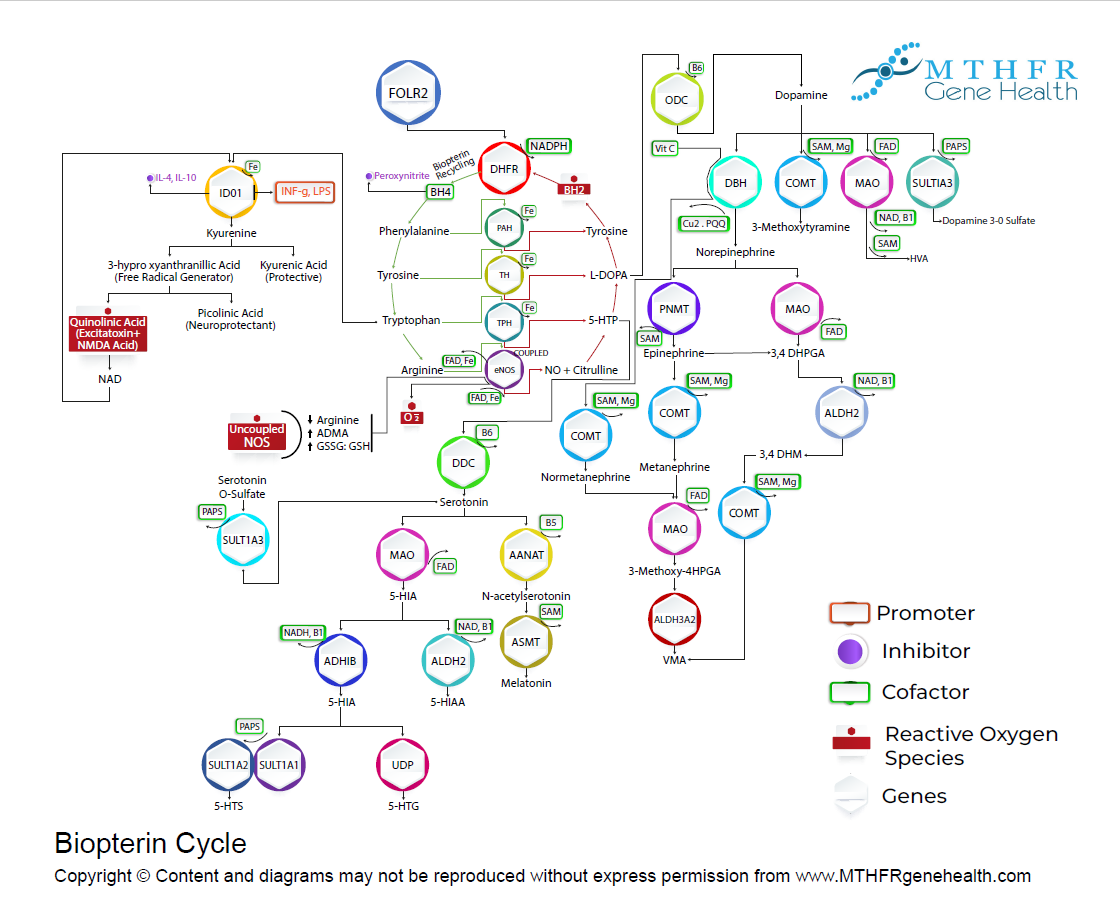
Biopterin Pathway
2. DHFR Gene Mutation
DHFR gene mutation symptoms & conditions:
- ADD/ADHD
- Addictive behaviors
- Alcoholism
- Allergies
- Alzheimer’s
- Anxiety
- Autism
- Bipolar
- Cancer
- Cardiovascular disease – Heart attack, atherosclerosis, elevated cholesterol, hypertension, stroke, fat metabolism issues
- Chemical sensitivity
- Cleft palate
- Congenital Heart defects
- Depression
- Diabetes
- Downs syndrome
- Fibromyalgia
- Immune deficiency
- Infertility
- Insomnia
- MS (multiple sclerosis)
- Neural tube defects
- Neuropathy
- Nutritional disorders (Vitamin & mineral imbalances that lead to disease)
- Panic attacks
- Parkinson’s
- Pulmonary embolisms
- Recurrent miscarriage
- Schizophrenia
- Spina bifida
- Electromagnetic sensitivity
- Thyroid dysfunction
- Chronic fatigue syndrome
- Chronic viral infection
- Night Terrors
Learn mor about DHFR gene mutations here.
3. CBS Gene Mutation
Symptoms of CBS Gene Mutation
Possible high (excess) copper:
- Nervous system – anxiety, agitation, depression, aggression
- Neurological disorders – impaired mental function, dyslexia, learning disabilities, emotional disturbances
- Blood – iron deficiency anemia
- Liver impairment – Wilson’s disease
- Immune system – prolonged viral infections, fungal infections, poor wound healing
- Thyroid Gland – Thyroid insufficiency and hypothyroidism
- Reproductive Hormonal imbalances – Premenstrual Syndrome (PMS)
- Adrenal Gland – Adrenal insufficiency and weakness
- Gastrointestinal – constipation, gastritis
- Cardiovascular – hypercholesterolemia
- Cardiovascular disease – CBS gene mutations can increase homocysteine levels, which are linked to a higher risk of developing cardiovascular disease. Cystathionine beta synthase deficiency, a genetic mutation related to homocysteine metabolism, is associated with hyperhomocysteinemia and various health outcomes, including cardiovascular diseases.
- Gallbladder – abnormal function, gallstone formation
- Musculoskeletal – scoliosis, poor collagen and elastin production, osteoarthritis
Others:
- Possible low zinc (Poor sense of taste or smell, white marks on more than two fingernails, frquent infections, stretch marks, acne or greasy skin, low fertility, pale skin, tendency to depression, loss of appetite)
- Possible pyrroles
- Low homocysteine
- Sleep problems – low serine getting to sleep
- Oxidative stress – low cysteine therefore low glutathione
- Gut problems that may increase ammonia
- Increased hydrogen sulfide will usually present as dizziness/low blood pressure
- High homocysteine – Low H2S will usually mean high blood pressure, low cysteine/low B6
- Inability to tolerate onion, garlic, eggs, cabbage (ie: high sulphur foods, Preservative 220 (sulphur dioxide) in wine & foods
- BH4 deficiency (Depression, anxiety, mood problems, panic attacks)
- Molybdenum deficiencies (Excess copper or sulphate interferes with its utilization, breathing difficulty, neurological disorders
- Vitamin B1, deficiencies (Tender muscles, eye pains, panic attacks, irritability, poor concentration, prickly legs, poor memory, stomach pains, constipation, tingling hands, and rapid heartbeat)
- B2 deficiencies (Burning or gritty eyes, sensitivity to bright lights, sore tongue, cataracts, dull or oily hair, eczema, dermatitis, split nails, cracked lips)
- Vitamin B6 deficiencies (Infrequent dream recall, water retention, tingling hands, depression, nervousness, irritability, muscle tremors or cramps, lack of energy, flaky skin)
Learn more about CBS here.
4. COMT Gene Mutation
Symptoms of COMT Gene Mutations
- Anxiety
- Social anxiety
- Alcoholism
- Bipolar disorder (psychiatric disorders)
- Irritability
- Hyperactivity
- Abnormal behavior (behavioral consequences)
- Psychosis
- Suicidal thoughts
- Negative self-thoughts
- Thyroid abnormalities
- Depression
- Fibromyalgia
- Panic attacks (Panic disorder)
- Poor libido
- Poor memory
- Hot flushes
- Toxicity (liver detoxification)
- Schizophrenia
- Fatigue (Stress hormones, adrenal fatigue syndrome)
- P.T.S.D (Post-traumatic stress disorder)
- Allergies (immune system)
- More sensitive to pain
- Infertility
- Autism
- Hormonal imbalances (estrogen imbalances, estrogen metabolites, catechol estrogens & harmful estrogen metabolites)
- Development disorders
- Cancer (Hormone-related)
- Neurological disorders
- Menopausal symptoms
- Andropause symptoms (male menopause)
Genetic polymorphisms, including those in the COMT gene, can lead to a variety of symptoms and conditions.
*Mental health symptoms in bold.
Reduced tolerance for methyl donors such as:
- 5-MTHF
- Methyl B12
- Caffeine
- SAMe (S-Adenosyl methionine)
- MSM (Methylsulfonylmethane)
- DMG (Dimethylglycine)
- TMG (Trimethylglycine) or Betaine
- CoQ10
- Melatonin
- Quercetin
- Carnitine
- Theanine
- Curcumin
- Green powders/smoothies
Learn more about COMT here.
5. MAO Gene Mutation
Symptoms of MAO Gene Mutation
Serotonin imbalances are common with MAO these include:
Low serotonin (From high MAO A)
- Aggression
- Anxiety / Social anxiety
- Carbohydrate craving
- Constipation – serotonin is required for control of gut motility as it activates smooth muscle activity.
- Depression – worse during winter
- Impulsive tendencies
- Insomnia
- Low pain tolerance
- Low self esteem
- Obsessive-compulsive disorder
- Panic disorder and post-traumatic stress disorder
- Poor dream recall
- Social phobia
- Suicidal thoughts
- Negative thoughts
High serotonin (From low MAO A)
- Aggressive behavior
- Antisocial behavior
- Confusion
- Extreme agitation
- GI distress / nausea
- Muscle twitching
*Mental health symptoms in bold.
These imbalances can potentially lead to neuro-psychiatric conditions and symptoms such as Obsessive Compulsive Disorder (OCD), mood disorders, mood swings, and aggressive and/or violent behavior.
Additionally, genetic variations in the MAO-A gene can influence the body’s stress response, contributing to stress related disorders such as PTSD and depression.
Possible MAO inhibitors
- Agrimony
- Angelica Archangelica (not for diabetes)
- Barbery
- Bilberry (Vaccinium myrtillus)
- Celery (apium graveolens)
- Coffee
- Coriander
- Curcumin
- Echinacea
- Evening Primrose
- St Johns Wort
- Uva Ursi
Lear more about MAO Gene Mutations here.
6. MTR/MTRR Gene Mutation
MTR/MTRR problems / Symptoms
- Homocysteine imbalances
- Methionine deficiency
Methionine deficiency signs – fat accumulation, fatty liver, lowered glutathione production, build up of toxins, cardiovascular problems, raised inflammatory histamine, poor memory, lowered immunity, UTI, reduced SAMe production.
- Vitamin B12 deficiency
Vitamin B12 deficiency signs – Poor hair condition, eczema or dermatitis, mouth oversensitive to heat or cold, irritability, anxiety or tension, lack of energy, constipation, tender or sore muscles, pale skin, megaloblastic macrocytic anemia, decrease in DNA synthesis, heart disease, skin pallor, fatigue, shortness of breath, and palpitations. Neurologic problems, which may be irreparable, are manifested by numbness in extremities, abnormal gait, increased loss of coordination, loss of a sense of relative position (proprioception), loss of vibration sense or touch in the ankles and toes, swelling of myelinated fibers, and demyelination, along with irritability, memory loss, disorientation, psychosis, and dementia, low blood leukocyte and thrombocyte counts. Pernicious (which refers to death) anemia. Folate deficiency can exacerbate these symptoms, particularly in patients with a history of psychiatric ailments.
Homocysteine builds up in the bloodstream due to mutations in the MTRR and MTR genes, hindering the conversion of homocysteine to methionine. This accumulation is linked to various health issues, including potential risks for developmental disorders.
Understanding genetic predispositions as risk factors is crucial in the context of neurodevelopmental issues and other health outcomes.
Learn more about MTR/MTRR Gene Mutations here.
7. BHMT Gene Mutation
BHMT Gene Mutation Symptoms
- Problem with gut function
- Neural tube defects
- Liver detoxification problems
- Homocysteine imbalances
TMG (Trimethylglycine or Betaine) deficiency – problems with gut function, and high homocysteine. But also the poor conversion of homocysteine to methionine. Monitoring folate levels in individuals with BHMT gene mutations is crucial as it can influence homocysteine levels and overall health.
Methionine deficiency – fat accumulation, fatty liver, lowered glutathione production, build up of toxins, and cardiovascular problems. So it raised inflammatory histamine, poor memory, lowered immunity, and UTI. It also reduced the same production.
Glycine deficiency – Low energy, blood sugar imbalance, fatigue, hypoglycemia, anemia, and chronic fatigue syndrome (CFS). But also digestive problems, seizure, depression, memory problems, Schizophrenia, Parkinson’s disease, and Huntington’s disease
Serine deficiency – Brain function, nervous system, immune system, and chronic fatigue syndrome (CFS). But also depression, insomnia, confusion, anxiety, and fibromyalgia.
Threonine deficiency – Cardiovascular problems, liver, central nervous system, immune system, and liver failure (fatty liver). But also depression, Amyotrophic Lateral Sclerosis (ALS).
Zinc deficiency symptoms – Poor sense of taste or smell, and white marks on more than two fingernails. Frequent infections, stretch marks, acne or greasy skin, low fertility, pale skin, tendency to depression, loss of appetite. Signs and symptoms of zinc deficiency observed in children are growth retardation. (caused by inadequate cell division needed for growth), skeletal abnormalities (from impaired development of epiphyseal cartilage. But the defective collagen synthesis or cross-linking), poor wound healing, and diarrhea. Skin rash/lesions/dermatitis (especially around body orifices), and delayed sexual maturation.
Some signs and symptoms of deficiency in adults include anorexia, diarrhea, lethargy, and depression. Skin rash/lesions/dermatitis, hypogeusia (blunting of sense of taste), alopecia (hair loss), and impaired immune function. Protein synthesis, and wound healing. Some population groups—especially the elderly, children of low income, vegetarians. Those with alcoholism— have been found to consume less than adequate amounts of zinc. Conditions associated with an increased need for intake include trauma, sickle cell anemia, and malabsorption.
Learn more about BHMT Gene Mutations here.
8. VDR Gene Mutation
VDR Gene Mutation Symptoms
- Joint pain or stiffness
- Backache
- Tooth decay
- Muscle cramps
- Hair loss
- Osteoporosis
- Rickets
- Seizures
- Immune deficiency
- Cancer risk
- Breaks in calcium unitization
- Problems with excess and or phosphorus utilization
- Vitamin D resistant rickets
Common Symptoms of VDR Gene Mutation
Individuals with VDR gene mutations may experience a range of symptoms, including:
- Rickets or osteomalacia, which are conditions characterized by the softening of the bones
- Weakened muscles, leading to fatigue and reduced physical strength
- Hair loss and various skin problems
- An increased risk of infections due to a weakened immune system
- Genetic studies have shown that variations in the human vitamin D receptor gene (VDR) may influence insulin resistance and other metabolic syndromes, such as type 2 diabetes and polycystic ovary syndrome.
- Reduced cancer defenses
Learn more about VDR Gene Mutations here.
9. G6PD Gene Mutation
Symptoms of G6PD Gene Mutations
- Your red blood cells explode
- Your reduced glutathione has oxidative damage
- CFS/ME due to mitochondrial dysfunction
- Your ferritin increases
- Cannot make PAPs
- Cannot make ATP
- Shut off the citric acid cycle
- The shutdown of Phase I liver detox where CYP450’s reside
- Circadian rhythm is compromised
- EMF sensitivity sets in
- Higher risk for hemolytic anemia
- Higher risk for POTS (10% of people with POTS are G6PDD)
- Redox signaling becomes impaired
- Higher risk for lupus
- Higher risk of being injured by a fluoroquinolone
Learn more about G6PD Gene Mutations here.
10. FUT2 Gene Mutation
FUT2 Gene Mutation Symptoms
- Any Autoimmune disease
- Bloating
- Leaky Gut
- Intestinal permeability
- Crohn’s disease
- Ulcerative colitis
- Eczema or dermatitis
- Problems with IgG immunity
- Problems with IgA immunity
- Autism
- IBS (Irritable Bowel Syndrome)
- Pernicious anemia
- Cardiovascular disease
- Cancer
- Neurodegenerative disorders
- Gut flora imbalances
- Mouth oversensitive to heat or cold
- Irritability
- Anxiety and or tension
- Lack of energy
- Constipation
- Tender or sore muscles
- Pale skin
- Tooth decay
- SIBO
Learn more about FYT2 Gene Mutations here.
11. GAD Gene Mutation
GAD Gene Mutation Symptoms
- Anxiety
- Panic attacks
- Mania
- OCD
- Hyperactivity
- Psychosis
- Irritability
- Can’t relax
- Constantly stressed
- Can’t sleep well
- Aggression
- Can’t let go
- Overly worried
- Can’t cope
- Agitated
- Tension
- Seizures
Learn more about GAD Gene Mutations here.
12. DDC Gene Mutation
DDC Gene Mutation Symptoms
Low serotonin:
- Aggression
- Anxiety / Social anxiety
- Carbohydrate craving
- Constipation – serotonin is required for control of gut motility as it activates smooth muscle activity.
- Depression
- Impulsive tendencies
- Insomnia
- Low pain tolerance
- Low self-esteem
- Obsessive-compulsive disorder
- Panic disorder and post-traumatic stress disorder
- Poor dream recall
- Social phobia
High serotonin:
- Aggressive behavior
- Antisocial behavior
- Confusion
- Extreme agitation
- GI distress/nausea
- Muscle twitching
*Mental health symptoms in bold.
Learn more about DDC Gene Mutations here.
13. APOE Gene Mutation
APOE Gene Mutation Symptoms
- Increased total cholesterol
- Decreased HDL levels
- Imbalances in EFA (essential fatty acids)
- Increased risk for development of Alzheimer’s disease
- Increased risk for dementia
- Increased risk for memory loss
- Increased risk for mental health problems
- Increased risk for psychosis associated with mental illness (schizophrenia, bipolar disorder)
Learn more about APOE Gene Mutations here.
14. FVL & F2 Gene Mutation
FVL & F2 Gene Mutations
- Obesity
- Pregnancy
- Immobility (including prolonged activity, a long trip by plane or car
- Smoking
- Oral contraceptives
- Cancer
- Trauma
- Poor diet
- Elevated cholesterol
- Poor circulation
- Gene mutations in MTHFR, DHFR, MTR & MTRR
- Stroke (and family history of)
- Heart attack (and family history of)
Learn more about FVL & F2 Gene Mutations here.
15. AGT Gene Mutation
AGT Gene Mutation Symptoms
- Essential hypertension
- Hypertension
- Preeclampsia
- Acute coronary artery syndrome
- Coronary artery disease
- Stroke
- Heart attack
- Type 2 diabetes
- Left ventricular hypertrophy
- Myocardial infarction
- Peptic ulcer hemorrhage
AGT genes are regulators of:
- Blood pressure
- Body fluid
- Electrolyte homeostasis
Symptoms of essential electrolytes imbalances
Sodium:
- Dizziness
- Heat exhaustion
- Low blood pressure
- Rapid pulse
- Mental apathy
- Loss of appetite
- Muscle cramps
- Nausea
- Vomiting
- Reduced body weight
- Headaches
Potassium:
- Rapid irregular heartbeat
- Muscle weakness
- Pins and needles
- Irritability
- Nausea
- Vomiting
- Diarrhea
- Swollen abdomen
- Cellulite
- Low blood pressure resulting from an imbalance of potassium: sodium ratio
- Confusion
- Mental apathy
Magnesium:
- Muscle tremors or spasms
- Muscle weakness
- Insomnia or nervousness
- High blood pressure
- Irregular heartbeat
- Constipation
- Fits or convulsions
- Hyperactivity
- Depression
- Confusion
- Lack of appetite
- Calcium deposits in soft tissue e.g. kidney stones
- Low levels of magnesium are also associated with increased rates of heart attack, anxiety, and nervousness
Learn more about AGT Gene Mutations here.
16. NOS Gene Mutation
NOS Gene Mutation Symptoms
- Coronary spasm
- Heart attack
- Stroke
- Blood pressure control
- Vasculature (arrangement of blood vessels in the body)
- Migraines
- Nervous system problems such as learning and memory
- Immune system problems
- Free radical damage
Learn more about NOS Gene Mutations here.
17. PEMT Gene Mutation
PEMT Gene Mutation Symptoms
- High blood cholesterol
- Excess fat
- Fatty liver
- Nerve degeneration
- High blood pressure
- Atherosclerosis
- Senile dementia
- Reduced resistance to infection
- Developmental abnormalities in newborn babies
- Nutritional deficiencies
- Toxicity
- Problems with methylation and or homocysteine balance
Learn more about PEMT Gene Mutations here.
18. DAO Gene Mutation
DAO gene mutation Symptoms
- Bouts of depression
- Headaches or migraines
- Food allergies and or overreactions to foods
- Abnormal fears, compulsions, and or rituals
- Fast metabolism
- Easy sexual orgasm
- Depression and or suicidal thoughts
- Sneezing in sunlight
- Crying, salivating, or feeling nauseated easily
- Inner tension or driven feeling
- Shyness or over-sensitivity as a child
- Seasonal allergies such as hay fever
- Obsessive or compulsive tendencies
- Little body hair and lean build
- Light sleeper
- Schizophrenia
- Pfeiffer disorder
Learn more about DAO Gene Mutations here.
19. GST & GPX gene mutation
GST & GPX Gene Mutation Symptoms
- Depression
- Anxiety
- Brain fog
- Sinus congestion
- High blood pressure
- Runny nose
- Earache
- Watery eyes
- Coughing
- Weight gain (overweight and or obesity)
- Sneezing
- Digestive problems
- Migraines
- Rashes
- Hives
- Inflammation
- Intolerance to smells
- Intolerances to foods
- Intolerances dust
- Intolerance to mold and mycotoxins
- Sensitivity to detoxification
- Unexplained reactions
Learn more about GST & GPX Gene Mutations here.
20. PON Gene Mutation
PON Gene Mutations Symptoms
The PON gene is a gene responsible for the detoxification of organophosphorus and nerve gases in the liver. Many organophosphates (pesticides and insecticides) such as parathion, diazinon, and chlorpyrifos are known to be both carcinogenic, linked to birth defects or decreased fertility, they are also toxic to the brain and nervous system.
Newborn babies have very low levels of PON1, the enzyme that breaks down organophosphates, so it’s easy to see how a couple who have exposure to organophosphates can have trouble conceiving and even miscarry.
If you have mutations in PON (as per the below homozygous image), your chances of having toxic levels of pesticide or insecticide goes up, this contributes directly to infertility and or miscarriage.
21. AANAT Gene Mutation
AANAT Gene Mutation Symptoms
- Inability to fall asleep
- Inability to stay asleep for at least 7 hours
- Disrupted sleep cycles
- Tiredness during the day
- Delayed sleep even when you are tired
- Depression
- Anxiety
- Nervousness
- Lack of ability to make enough anti-stress steroids (low-stress tolerance)
- Mood swings
- Poor dream recall
- Symptoms associated with Vitamin B5 deficiency
Learn more about AANAT Gene Mutations here.
22. CACNA1C Gene Mutation
CACNA1C Gene Mutation Symptoms
When you see a gene mutation in CACNA1C, think of the “intercellular calcium problem”. In other words how you get your calcium into your cells.
Why is that important?
Calcium promotes a healthy heart, clots blood, promotes healthy nerves, contracts muscles, improves skin, bone, and teeth health, relieves aching muscles and bones, maintains the acid-alkaline balance, and reduces menstrual cramps and tremors.
Deficiency signs Muscle cramps or tremors, insomnia or nervousness, joint pain or arthritis, tooth decay, and high blood pressure.
And there is also a knock-on effect from this gene mutation and that is calcium works with magnesium.
Why is that important?
Magnesium is an essential element and is of importance in cellular metabolism. Magnesium is a natural sedative. Major bodily functions of magnesium include energy production and nerve conduction.
Deficiency signs Muscle tremors or spasms, muscle weakness, insomnia or nervousness, high blood pressure, irregular heartbeat, constipation, fits or convulsions, hyperactivity, depression, confusion, lack of appetite, calcium deposits in soft tissue e.g. kidney stones. Low levels of magnesium are also associated with increased rates of heart attack, anxiety, and nervousness.
Try getting a good night’s sleep with that problem robbing you of the major minerals that work as a team to make you sleep well among so many other things.
So, calcium and magnesium work together and they cant do that when there is a problem with CACNA1C.
23. ACE Gene Mutation
ACE Gene Mutation Symptoms
- Hypertension / Hypertensive events
- Elevated blood pressure
- Headaches
- Heart disease / Heart attack
- Kidney disease
- Stroke
- Alzheimer’s disease
- Human coronaviruses, including SARS-CoV and SARS-CoV-2
- Psoriasis
- Infertility
- Body fluid imbalances
- Blood pressure problems including imbalances (low and high)
- Inability to calm down your blood pressure from everyday emotional events such as stress
Imbalances of electrolytes such as:
Symptoms of essential electrolyte imbalances
Sodium:
- Dizziness
- Heat exhaustion
- Low blood pressure
- Rapid pulse
- Mental apathy
- Loss of appetite
- Muscle cramps
- Nausea
- Vomiting
- Reduced body weight
- Headaches
Potassium:
- Rapid irregular heartbeat
- Muscle weakness
- Pins and needles
- Irritability
- Nausea
- Vomiting
- Diarrhea
- Swollen abdomen
- Cellulite
- Low blood pressure resulting from an imbalance of potassium: sodium ratio
- Confusion
- Mental apathy
Magnesium:
- Muscle tremors or spasms
- Muscle weakness
- Insomnia or nervousness
- High blood pressure
- Irregular heartbeat
- Constipation
- Fits or convulsions
- Hyperactivity
- Depression
- Confusion
- Lack of appetite
- Calcium deposits in soft tissue e.g. kidney stones
- Low levels of magnesium are also associated with increased rates of heart attack, anxiety, and nervousness
Learn more about ACE Gene Mutations here.